
Guide · Maintenance
Balancing Mud Tires: Why They Shake
A perfectly balanced mud-terrain can still vibrate at 65 mph. The reason is a property that a standard spin balancer cannot measure at all.
The problem is not weight, it is shape
The clearest statement we found comes from the trade press: light truck and aggressive tread tires can change shape significantly at highway speeds and exhibit force variation and imbalance that does not show up during low-speed measurement.
That one sentence explains the whole phenomenon. A heavy, flexible, deeply-lugged casing deforms at 65 mph in ways a stationary or slow-turning balancer never sees. You can balance the assembly perfectly and still have a truck that shakes.
What radial force variation actually is
Radial force variation covers the vertical and fore-aft forces a tire generates while rotating under load. It occurs regardless of construction type, and it is why a wheel with zero measured imbalance can still transmit a vibration.
First harmonic variation — one bump per revolution, like an egg — is the common form, and it can come from imbalance, from runout, or simply from the wheel not being centred properly on the balancer. And it is worth knowing that all tires of the same size, model and brand are not the same: manufacturers hold force variation within quality limits, and vehicle makers sometimes pay more for tires with less of it.
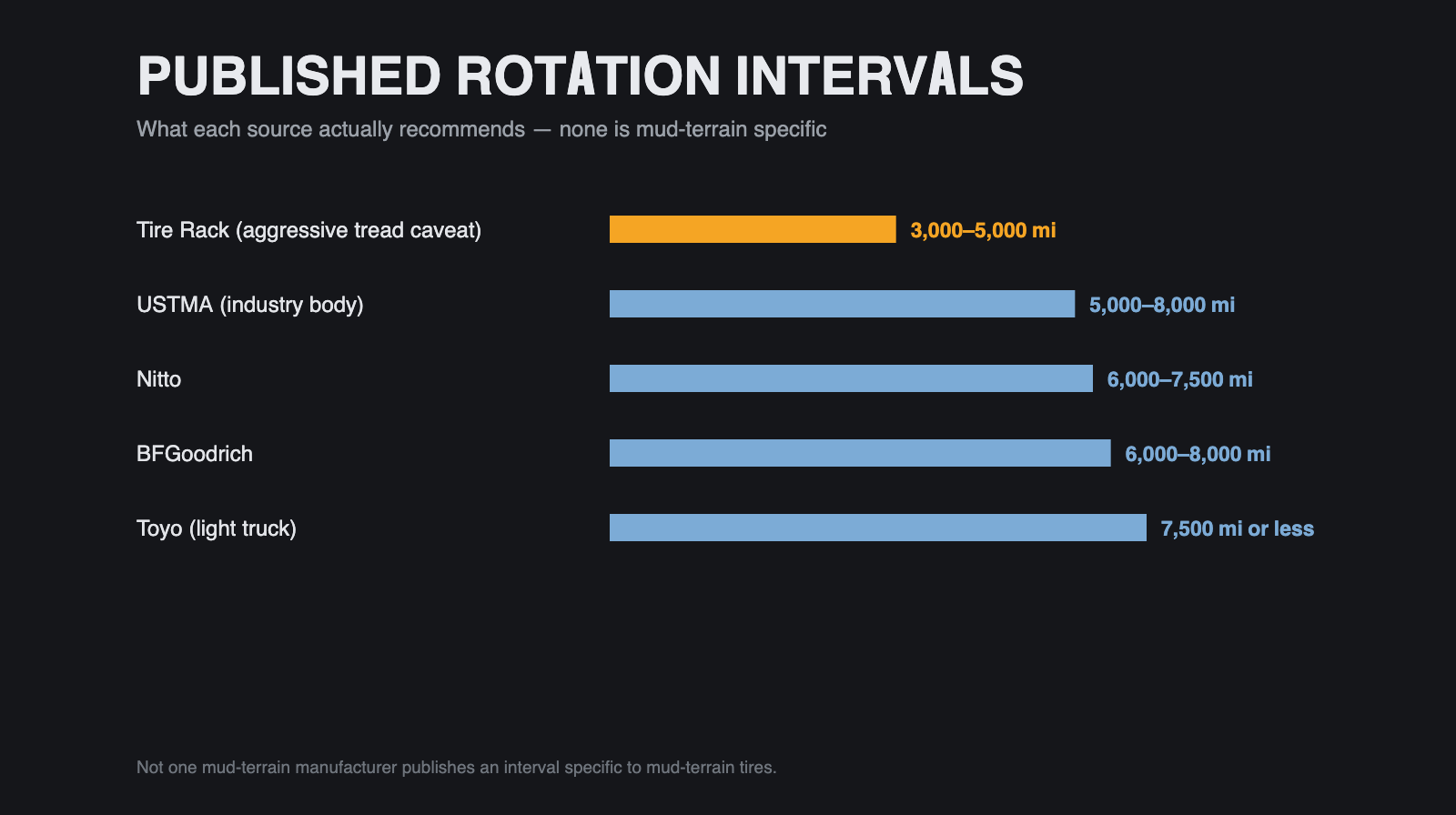
The 3,000–5,000 mile figure quoted for mud-terrains traces to one Tire Rack caveat about aggressive tread — not to any tire maker.
What a road-force balancer does differently
It presses a loaded roller against the rotating assembly — up to 1,400 lb on a Hunter GSP9700 — to simulate the road, and measures the variation in force acting toward the tire centre. A standard spin balancer corrects weight distribution and cannot address force variation at all.
Two things make it worth paying for on aggressive tires. It measures lateral and radial rim runout separately, so it tells you whether the wheel or the tire is at fault — which is the difference between arguing with the tire shop about the right component and the wrong one. And its match-mounting function rotates the tire on the rim to align the tire’s force high spot with the wheel’s runout low spot, cancelling a defect that no amount of weight will fix.
The honest recommendation: worth it on a new set of mud-terrains, and worth it on any single wheel that will not settle after two conventional rebalances.
One caution. A pass/fail road-force threshold in pounds circulates widely on forums. We could not source it to Hunter. Hunter’s own manual confirms separate limits exist for passenger, SUV and light-truck tires and that the operator can change them — which means the acceptable figure is set per shop and per vehicle class, not by a universal number.
Rotation matters more than people think
Not one mud-terrain manufacturer publishes a rotation interval specific to mud-terrain tires. Nitto says every 6,000 to 7,500 miles, BFGoodrich 6,000 to 8,000, Toyo 7,500 or less for light truck, USTMA 5,000 to 8,000. Only Tire Rack singles out aggressive tread at all, recommending every 3,000 to 5,000 miles for aggressive, all-terrain or off-road-focused patterns — and it gives no separate figure beyond that range.
So the number the off-road community quotes for mud-terrains comes from one retailer’s caveat, not from any tire maker. It is still the most defensible advice available.
Cupping is a feedback loop
BFGoodrich publishes a useful diagnostic: shoulder wear means under-inflation, centre wear means over-inflation, single-edge wear points to alignment, and cupping points to imbalance or worn shocks. It also makes the point people skip — rotation redistributes wear but does not fix its cause.
On a mud-terrain, cupping compounds. A slight imbalance or a tired damper cups the lugs, the cupping worsens the imbalance, and the vibration accelerates. Rotating frequently interrupts the loop before it establishes, which is the real argument for the shorter interval.
There is a warranty consequence too. Toyo excludes mileage adjustment on tires that have worn unevenly or show a 2/32″ difference between major grooves or between front and rear sets. Our guide to when to replace mud tires covers how to read that wear.
What about balancing beads?
We searched for a manufacturer position on internal balancing media from Toyo, Nitto, BFGoodrich, Falken and Maxxis and found nothing at all — no endorsement, no prohibition, no warranty language. USTMA says only that balancing should be done by trained professionals on properly calibrated equipment.
The claimed mechanism is not in dispute in principle. The limitation is: media can only cancel mass imbalance. They cannot correct radial force variation or runout, which is precisely the failure mode that afflicts aggressive light-truck tires at highway speed. Beads are not a substitute for a road-force diagnosis, whatever else they may be.
Watch
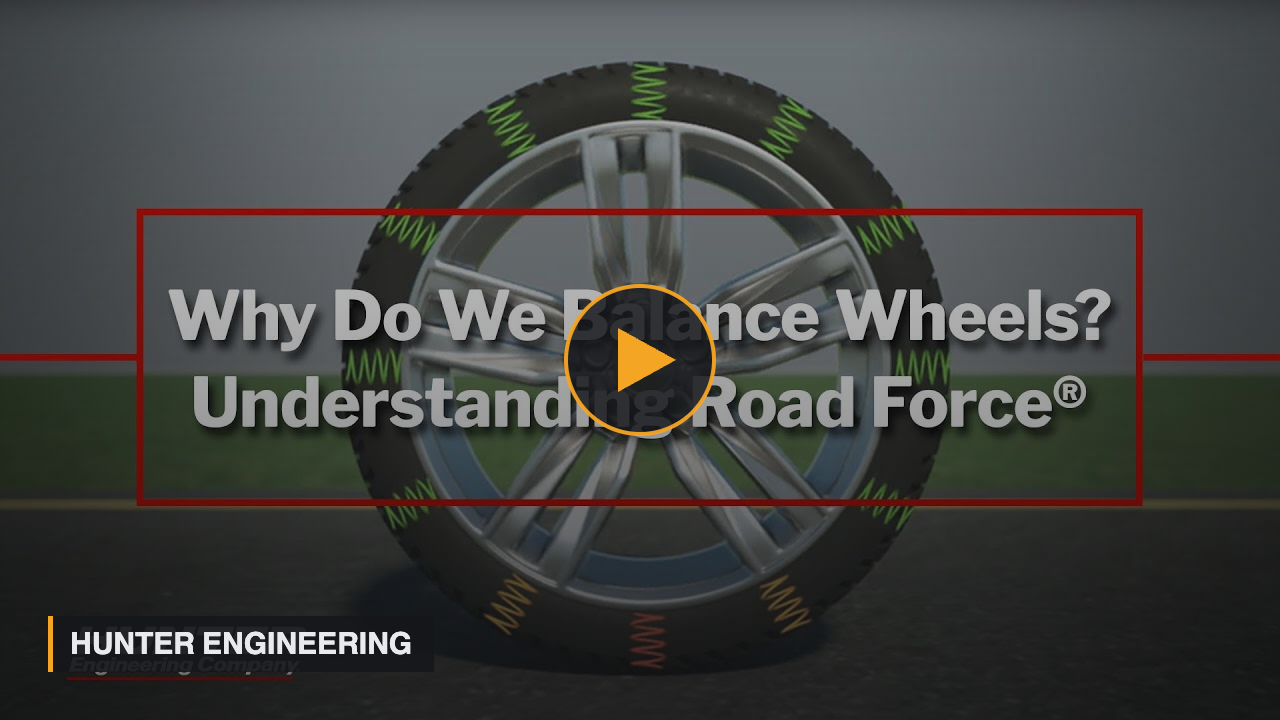
Hunter Engineering — the company that builds road-force balancers — explaining what force variation is and why static balance alone leaves a tire shaking.
Watch on YouTube →Sources
Tire Review, What RFV means to the tire industry, part 1 (tirereview.com) · Tire Review, When is road force balance overkill? (tirereview.com) · Hunter Engineering, GSP9700 operation instructions (weber.edu) · Tire Rack, How does Tire Rack confirm a tire and wheel package will roll smoothly? (tirerack.com) · Tire Rack, What is the best way to rotate tires? (tirerack.com) · Les Schwab, The basics of road-force balancing (lesschwab.com) · BFGoodrich, Tire rotation — why it matters and how to do it (bfgoodrichtires.com) · Nitto Tire, Maintenance (nittotire.com) · Toyo Tires, Passenger and light truck tire limited warranty (toyotires.com) · USTMA, Care and service of passenger and light truck tires (ustires.org). Retrieved 10 September 2026.
We may earn a commission if you buy through links on this site. Commission plays no part in which tires are listed or how they are ordered.