
Guide · Maintenance
When to replace mud tires
The legal minimum and the safe minimum are not the same number, and the gap between them is measured in nearly two hundred feet of wet stopping distance.
The numbers that matter
Tread depth is measured in thirty-seconds of an inch. New tires typically start around 10/32in and up; mud-terrains often start deeper. The thresholds below are where the decisions sit.
Depth
What it means
Verdict
10/32in
Roughly new tread on a typical tire
Full wet performance
4/32in
The depth safety experts recommend as the practical replacement point
Start shopping
2/32in
Legal minimum in 42 US states; wear bars sit flush with the tread here
Replace now
1/32in
Legal minimum in California and Idaho only
Well past safe
Arkansas, Massachusetts, Mississippi, Montana, North Dakota, South Carolina and West Virginia have no specific statutory tread depth requirement.
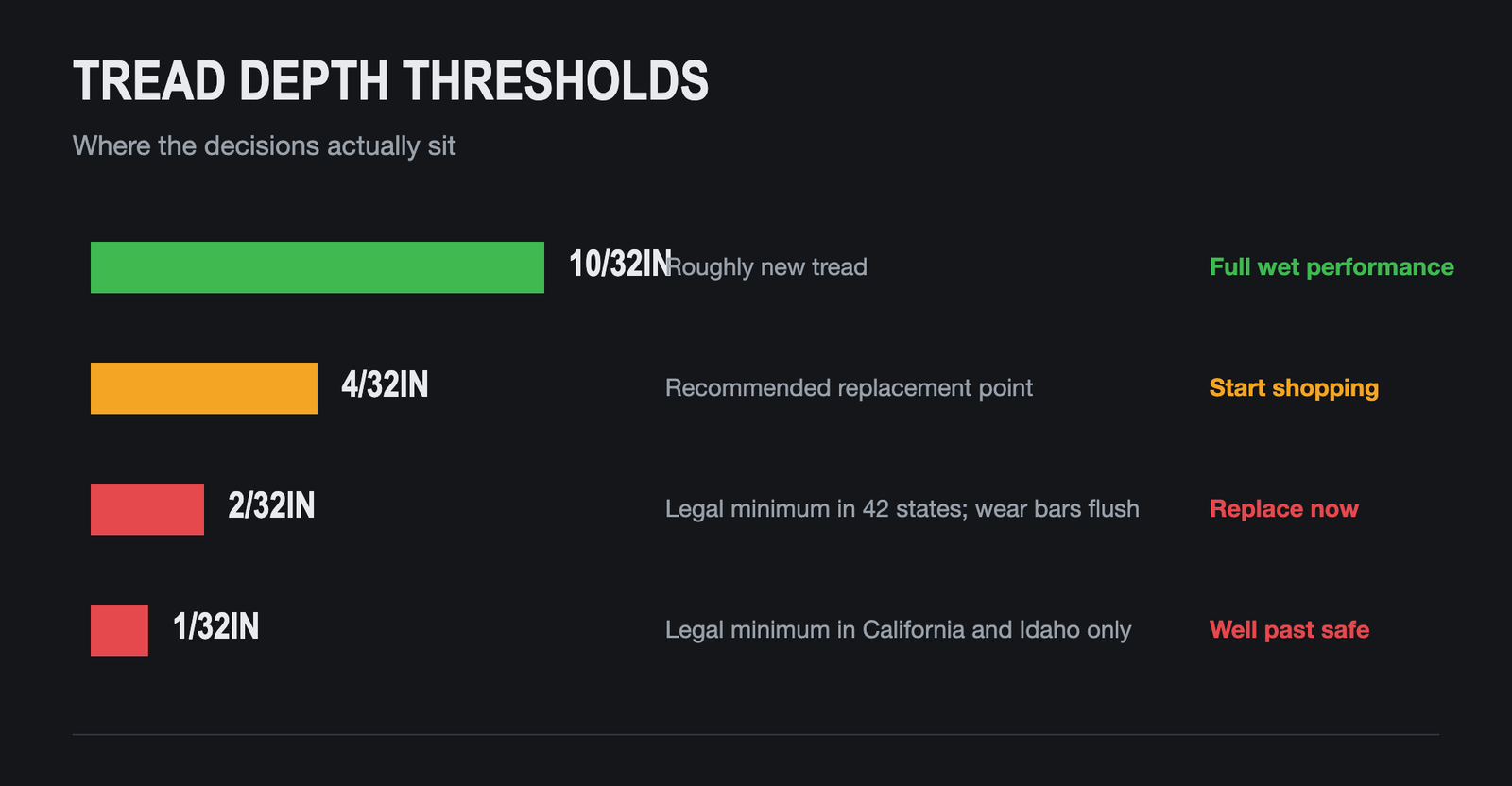
Legal minimum and safe minimum are different numbers. Wear bars sit at 2/32in, flush with the tread.
Why 4/32in, not 2/32in
Wet stopping distance is the reason. From 70mph, a tire at roughly new tread stops in about 195 feet. By the time that same tire reaches the legal 2/32in minimum, wet stopping distance rises to approximately 380 feet — an increase of about 95%.
Put plainly: running to the legal limit nearly doubles how far you travel before stopping in the wet. The legal minimum describes when you can be cited, not when the tire stopped being safe.
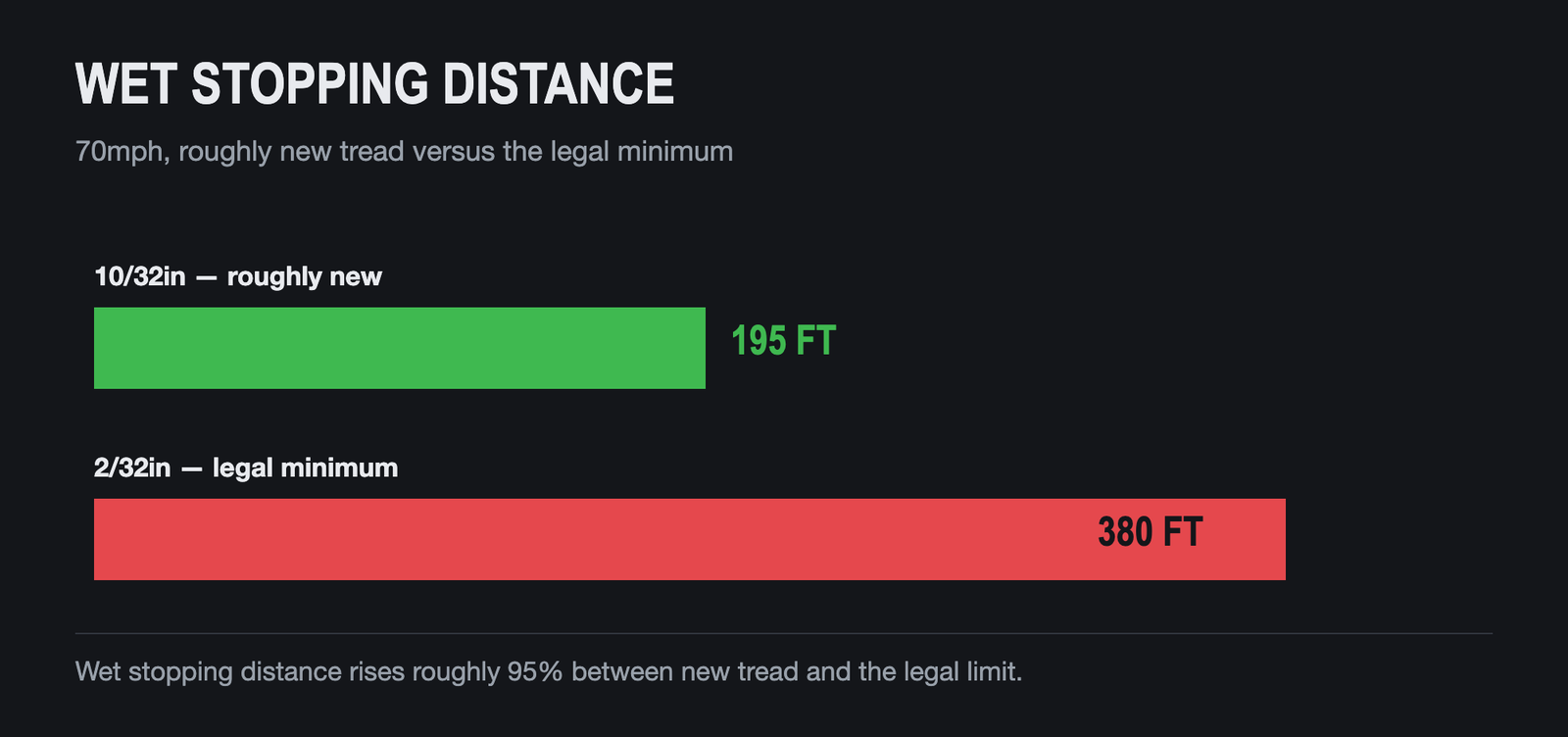
From 70mph, wet stopping distance rises from roughly 195 feet at new tread to about 380 feet at the legal limit.
Finding your wear bars
Every DOT-legal tire has moulded wear indicator bars sitting in the tread grooves at exactly 2/32in. When those bars sit flush with the surrounding tread blocks, the tire is at the legal limit and should already have been replaced.
On a mud-terrain the bars can be harder to spot than on a highway tire, because the tread blocks are larger and the voids deeper. Look in the circumferential grooves rather than between the outer lugs.
What’s different about mud-terrains
Mud-terrains start with deeper tread than highway tires, so they have further to wear — but the same 2/32in and 4/32in thresholds still apply, because those are about water evacuation, not about how much rubber you started with.
Two failure modes matter more on M/Ts than on highway tires: uneven or cupped wear from missed rotations, which large blocks are prone to, and chunking, where pieces tear from a block after off-road use. A tire can have legal depth and still need replacing if blocks are chunked or the sidewall is damaged. Depth is a minimum test, not the only test.
Age, not just depth
Rubber degrades whether or not you drive on it. A tire with plenty of tread that has been on the vehicle for many years, or stored in sunlight, can develop sidewall cracking that no depth gauge will reveal. Check the DOT date code on the sidewall — the last four digits give the week and year of manufacture.
This matters disproportionately for mud-terrains, because they are frequently fitted to vehicles that cover low annual mileage.
Sources
TireGrades, “Minimum Tire Tread Depth: Legal Limits by State” (tiregrades.com). Retrieved 9 September 2026.
We may earn a commission if you buy through links on this site. Commission plays no part in which tires are listed or how they are ordered.